
High insulation levels, thermal bridge free design and an airtight envelope, three key aspects needed to achieve Passive House level efficiency, have an additional advantage: high quality building physics. This makes structural longevity an inherent property of Passive House buildings.
The fabric-¬first approach of Passive House design prioritises the performance of the components and materials that make up the building shell. Identifying your thermal envelope, the cocoon that keeps you cosy, is where it all starts. This sounds simple, but can be tricky if there are basements, garages or other spaces adjoining the building.
Just as a vacuum flask keeps drinks at the desired temperature, the well-insulated envelope of a Passive House keeps indoor areas at a pleasant temperature. Passive Houses are characterised by consistent temperatures on all internal surfaces and constant indoor climates without temperature swings or draughts – during cold winter months as well as hot summer periods.
Wherever you have identified building elements as part of the thermal envelope, you need to be able to detect three functional layers:
- an airtightness layer on the inside of the insulation
- the insulation layer
- a wind and weather tightness layer

AIR TIGHTNESS LAYER
Airtightness is central to attaining Passive House certification, but most importantly: it is a key indicator of construction quality.
Everyday language doesn’t distinguish clearly between different moisture and heat trans- fer mechanisms in buildings, so let’s clarify what we mean by airtightness.
Airtightness refers to the level of control of bulk air movement through the thermal enve- lope, driven by differences in air pressure and temperature. Think of draughts and leaks around window seals, and other junctions.
Lastly, vapour diffusion describes the movement of water vapour through a material. Different materials permit different levels of vapour diffusion, sometimes independent of how airtight they are.
In a nutshell, a leaky building is not necessarily a breathable building, and an airtight building is not automatically bad at managing moisture.
To achieve an airtightness layer, it is all in the planning. The first step is to draw a continuous line around the inside of your building. This line represents the airtight envelope of your project. This is an integral part of your thermal envelope.
Whenever different materials meet, or where doors, windows or building services are in- stalled, the detail needs to be designed, and any gaps correctly sealed.
INSULATION
Insulation provides excellent thermal protection of the building envelope and is essential to achieve high levels of energy efficiency, as most of the heat in conventional buildings is lost through the exterior walls, roof, and floor. This principle is reversed in the summer: alongside external shading elements and energy-efficient household appliances, thermal insulation ensures that heat remains outside, keeping the inside pleasantly cool.
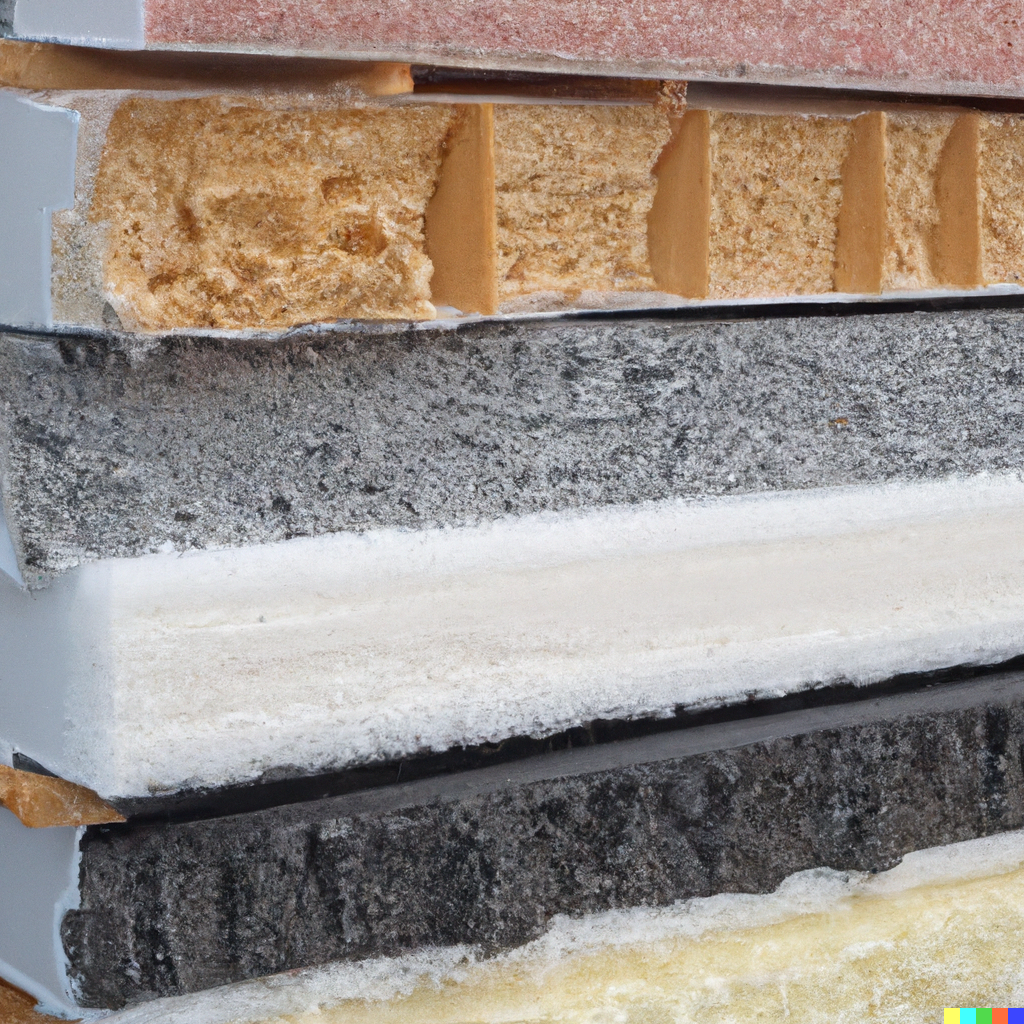
The level of insulation required for Passive House depends on various factors such as the climate, the building’s shape, and its orientation. Even the quality of other building elements plays a role: using extremely efficient windows, for example, may mean that lower levels of insulation are needed. Nonetheless, Passive House levels of insulation are almost always higher than those required by building codes. With the prices for scaffolding and labour remaining unchanged, the extra insulation costs are insignificant by comparison. Given the energy savings it brings, investing in thicker insulation pays off from the very beginning, even at today’s energy pricing.
For Passive House projects, the most important factor to consider is the availability of accurate, independent information on the product’s performance and longevity. Depending on your material choices and the local climate, the thermal envelope may be thicker than that of a project built to a minimum code standard.
Insulation comes in numerous forms, from strawbale to batts, SIP panels to vacuum panels. The decision on what type to use on a project is up to you. Remember, Passive House is a performance standard; it is not prescriptive. Insulation is typically an inexpensive building material.
The necessary thickness of the insulation layer will depend on the form of the buildings, environmental factors, and the type of insulation used. To give you an idea: it is possible 90 mm of typical wall insulation may suffice for a compact, multi¬-storey apartment building in Sydney. 300 mm of typical insulation in your walls may still not be enough for a sprawling single-storey house in Melbourne.
In addition to using well-insulated windows, Passive House buildings reduce the heat lost through the building fabric by insulating the walls, roof, and floors in a continuous layer with typical U-values between 0.1 and 0.15W/m2K.
WINDOW + WEATHER TIGHTNESS
Windows are a significant part of the envelope, and they must be carefully chosen and installed to ensure that they are airtight and thermally efficient. Air-tightness in windows is achieved using high-quality seals, multi-point locking systems, and thermally broken frames. The choice of glazing also plays a significant role in maintaining window and weather tightness. Weather sealing is also important, as it prevents air and moisture infiltration, which can cause heat loss, dampness, and damage to the building materials. Effective weather sealing is achieved with high-quality materials and careful attention to detail during installation. The implementation of weather-resistant materials, such as silicone or EPDM gaskets, ensures that the building envelope remains tightly sealed, even in harsh weather conditions.
HIGH PERFORMANCE WINDOWS
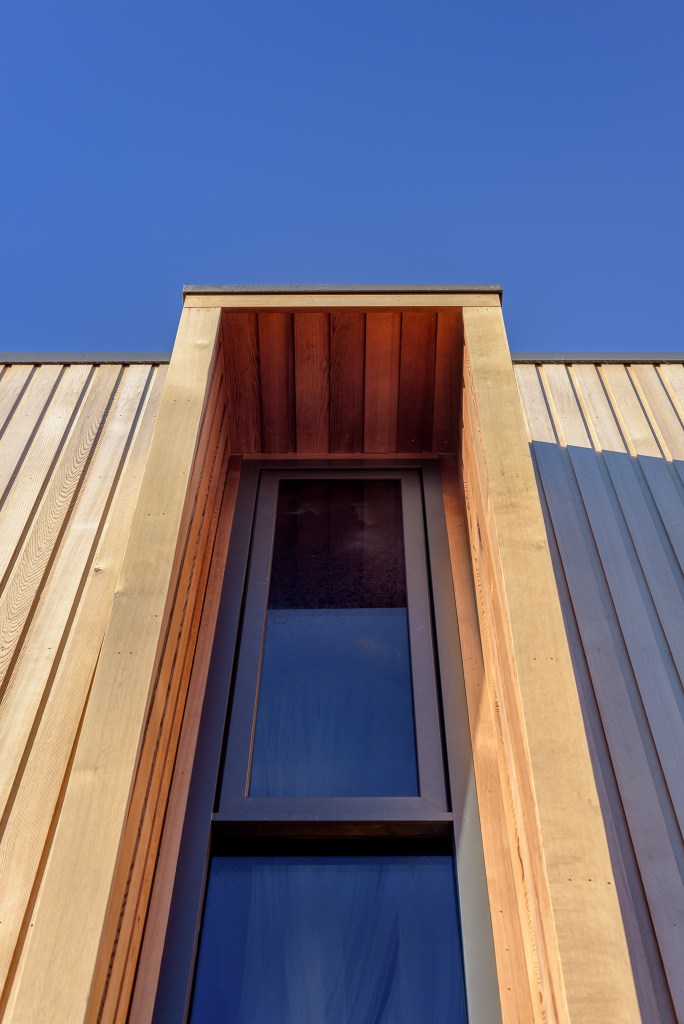
High-performance windows are designed to minimize heat loss, maximize solar gain, and control unwanted solar heat gain. According to a study by the National Renewable Energy Laboratory (NREL), high-performance windows can reduce energy consumption in residential buildings by up to 40%. To achieve optimal performance, high-performance windows utilize advanced glazing technologies, such as low-emissivity coatings, gas-filled cavities, and triple-pane glass. In addition, they incorporate thermally broken frames, improved sealing systems, and high-quality hardware to ensure airtightness and durability.
References:
Defining the Nearly Zero Energy Building NZEB. www.passreg.eu
Everything you always wanted to know about Passive Houses in New Zealand. Passive House Institute New Zealand.Ibid Everything you always wanted to know about Passive Houses in New Zealand. Passive House Institute New Zealand.
Defining the Nearly Zero Energy Building NZEB. www.passreg.eu
Active for more comfort: Passive House. International Passive House Association.
Everything you always wanted to know about Passive Houses in New Zealand. Passive House Institute New Zealand.Ibid. Passivhaus Trust. (2018). The Importance of Airtightness in Passivhaus. https://www.passivhaustrust.org.uk/userfiles/documents/ Events/2018/National-Conference/5.5-The-Importance-of-Airtightness-in-Passivhaus.pdf
U.S. Department of Energy. (2016). Energy-Saving Homes, Buildings, and Manufacturing. https://www.energy.gov/sites/default/ files/2016/09/f33/manuf_energy_saving_solutions.pdf
National Renewable Energy Laboratory. (2019). High-Performance Windows. https://www.nrel.gov/docs/fy19osti/73406.pdf International Passive House Association. (2021). Passive House Windows. https://passivehouse-international.org/index.php?page_id=77

 justine money